
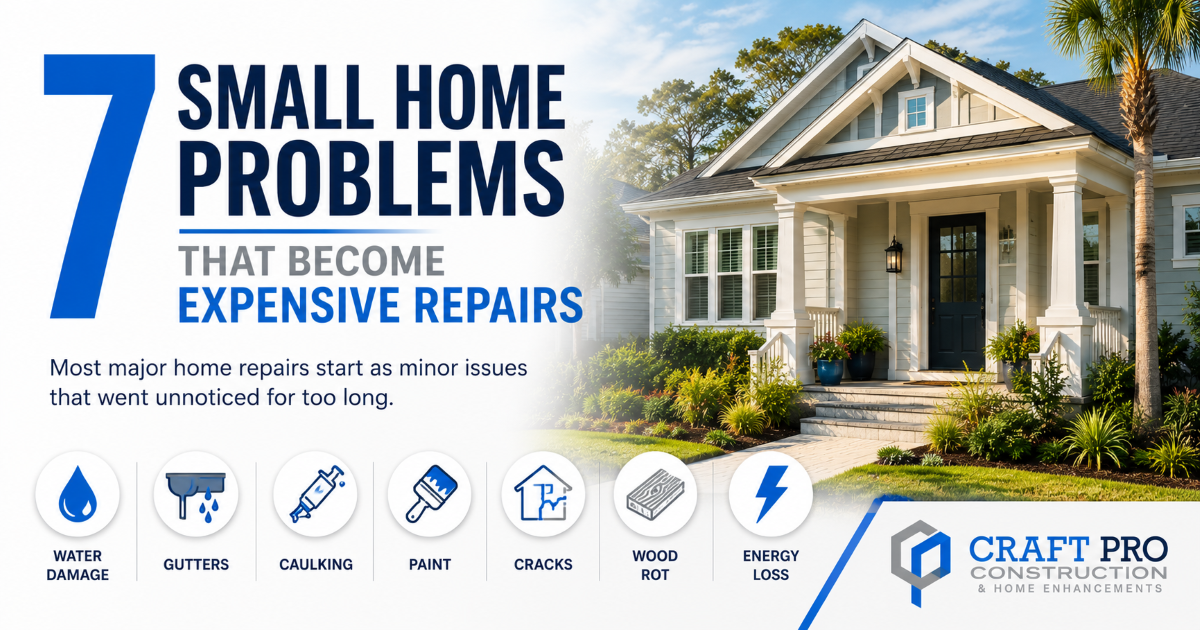
 Most homeowners don’t wake up one morning and discover a major repair out of nowhere.
More often, expensive repairs begin as small issues that seem easy to ignore.
A minor leak.
A clogged gutter.
A little peeling paint.
A crack that doesn’t appear to be getting worse.
The challenge is that many of these seemingly minor issues can lead to larger problems over time. By the time the damage becomes obvious, the repair often costs significantly more than it would have if addressed early.
The Real Challenge for Homeowners
One of the biggest frustrations homeowners face is knowing which issues require immediate attention and which can wait.
Not every crack means structural damage.
Not every water stain signals a major problem.
Not every repair needs to happen today.
The difficulty is knowing the difference.
At Craft Pro, we help homeowners identify potential concerns, prioritize maintenance and improvements, and make informed decisions about protecting their homes and investments.
Because the truth is, most major repairs start as minor issues that simply went unnoticed for too long.
1. Water Stains on Ceilings or Walls
A small stain may not seem urgent, especially if it appears dry.
However, water stains are often evidence of an active or previous leak.
Possible causes include:
- Roof damage
- Plumbing leaks
- Window or door failures
- Improper flashing
Even a small amount of moisture can lead to mold growth, insulation damage, wood rot, and costly repairs.
The key isn’t covering the stain—it’s identifying the source.
2. Gutters That Overflow During Rain
Gutters play a critical role in protecting your home.
When gutters become clogged or damaged, water can collect around your foundation, siding, and landscaping.
Over time, poor drainage can contribute to:
- Foundation settlement
- Erosion
- Mold and mildew
- Exterior deterioration
- Wood rot
A simple gutter issue can quickly become a much larger problem if ignored.
3. Cracked or Missing Caulk
Caulk around windows, doors, trim, and exterior penetrations helps keep water and air where they belong.
When it begins to crack, separate, or fail, moisture can enter vulnerable areas of the home.
This can lead to:
- Water damage
- Higher energy bills
- Wood rot
- Pest intrusion
The good news is that this is often one of the easiest and most affordable maintenance items to address.
4. Peeling Paint or Exposed Wood
Many homeowners think of paint as purely cosmetic.
In reality, exterior paint is one of your home’s protective barriers.
When paint begins to fail, moisture can penetrate exposed surfaces.
Left untreated, this can result in:
- Rotting trim
- Damaged siding
- Structural deterioration
- Increased maintenance costs
Protecting your home’s exterior is often far less expensive than replacing damaged materials.
5. Doors and Windows That No Longer Close Properly
A sticking door or difficult-to-open window may seem like a minor inconvenience.
Sometimes it is.
Other times, it can indicate:
- Foundation movement
- Structural settlement
- Moisture-related swelling
- Frame deterioration
Changes like these deserve attention, especially if they appear suddenly or worsen over time.
6. Soft or Rotting Wood
Soft spots on decks, trim, porches, or exterior framing should never be ignored.
Wood rot develops when moisture remains trapped for extended periods.
What starts as a small repair can eventually impact:
- Structural integrity
- Safety
- Appearance
- Property value
The earlier rot is discovered, the easier and less expensive it is to address.
7. Rising Energy Bills
Increasing utility costs aren’t always caused by higher rates or hotter weather.
Sometimes your home is signaling that something needs attention.
Potential causes include:
- Air leaks
- Aging windows
- Poor insulation
- Worn weatherstripping
- HVAC inefficiencies
Improving energy efficiency often increases comfort while reducing monthly expenses.
A Simple 3-Step Plan for Homeowners
When you notice a potential issue, there’s no need to panic.
Instead, follow a simple process:
Step 1: Notice the Warning Signs
Pay attention to changes around your home.
Water stains, cracks, soft wood, peeling paint, and rising utility bills are all signals worth investigating.
Step 2: Identify the Cause
Avoid making assumptions.
The visible issue is often a symptom of a larger underlying cause.
Step 3: Address Problems Early
Small repairs are usually easier, less disruptive, and less expensive than major restorations.
Taking action early helps protect both your home and your budget.
The Cost of Waiting
One of the biggest mistakes homeowners make is assuming that if something isn’t causing immediate problems, it can wait indefinitely.
Unfortunately, time rarely improves home maintenance issues.
Water continues to spread.
Wood continues to rot.
Small cracks continue to grow.
What could have been a manageable repair often becomes a larger, more expensive project.
The longer an issue remains unresolved, the greater the potential impact on your home’s condition, value, and long-term maintenance costs.
What Success Looks Like
Imagine knowing your home is protected.
Imagine having confidence that you’re addressing the right issues at the right time.
Imagine having a clear understanding of what needs attention now, what can wait, and what improvements could increase your home’s value and enjoyment.
That’s the peace of mind every homeowner deserves.
Your Next Step
At Craft Pro, we help homeowners identify maintenance concerns, protect their investment, and create practical improvement plans based on their goals and budget.
Our Home Value & Protection Assessment is designed to help homeowners understand:
✓ Immediate concerns
✓ Future maintenance priorities
✓ Opportunities to improve comfort
✓ Potential value-enhancing projects
✓ Recommended next steps
No pressure.
No gimmicks.
Just practical guidance from professionals who want to help you make informed decisions about your home.
Schedule Your Free Home Value & Protection Assessment Today
Because protecting your home is always less expensive than repairing avoidable damage.